Ramadan and Diabetes: Practical nutritions tips for fasting safely
Ramadan and Diabetes: Practical Nutrition Tips for Fasting Safely
Fasting during Ramadan can be an important part of faith, family and community. If you live with diabetes, it also needs some extra planning.
Food choices, fluids, medications, glucose monitoring and activity may all need to be adjusted during Ramadan. This is especially important if you take insulin, certain diabetes tablets, or have a history of high or low glucose levels.
Before fasting, speak with your doctor, diabetes educator or dietitian. Medication changes may be needed, and your diabetes team can help you plan what to monitor and when to seek advice.
The infographics below provide a simple overview of managing diabetes during Ramadan, including what to consider before sunrise, during the day and after sunset.
Before Ramadan: speak with your diabetes team
If you are planning to fast, it is worth speaking with your healthcare team before Ramadan begins.
This can help you review:
whether fasting is safe for you
your medication plan
when to check glucose levels
what to do if glucose levels are too high or too low
when you may need to break the fast for safety
how to adjust exercise, fluids and food timing
This is particularly important if you take insulin, sulfonylureas or other medications that can increase the risk of low glucose levels.
Suhoor: before sunrise
The meal before sunrise can make a big difference to how you feel during the day.
A useful Suhoor meal usually includes:
enough water
a source of protein
a lower GI or higher-fibre carbohydrate
foods that help keep you satisfied for longer
Examples might include oats with yoghurt, grain toast with eggs, beans, hummus, tofu, cheese, or other protein-rich foods with a suitable carbohydrate choice.
Try not to skip Suhoor if you are fasting. Going into the day without food or fluids can make it harder to manage energy, hunger, hydration and glucose levels.
During the fast
During the day, the main focus is monitoring and safety.
This may include checking glucose levels, following the medication plan you discussed with your diabetes team, modifying exercise if needed, and knowing when to seek advice.
If you feel unwell, or your glucose levels are too high or too low, contact your healthcare team. Your doctor, diabetes educator or dietitian can help you create a clear plan for what to do.
Iftar: after sunset
After sunset, it can help to break the fast gently.
Start with fluids, soup, and dates or dried fruit in moderate amounts if these are part of your usual Ramadan routine. Then allow some time before having your main meal.
For the main meal, aim for a balanced plate that includes:
a carbohydrate food in a suitable portion
a protein-rich food
salad or vegetables
Sweets, fried foods and rich desserts can still appear, but it helps to keep them as occasional extras rather than the main part of the meal.
Later in the evening, hydration remains important. Some people may also need a light snack before bed, depending on their glucose levels, medication, appetite and activity.
Ramadan diabetes infographics
The infographics below summarise the key points for managing diabetes during Ramadan.
They cover:
what to include before sunrise
what to monitor during the fast
how to break the fast after sunset
food and fluid ideas for Suhoor and Iftar
when to involve your healthcare team
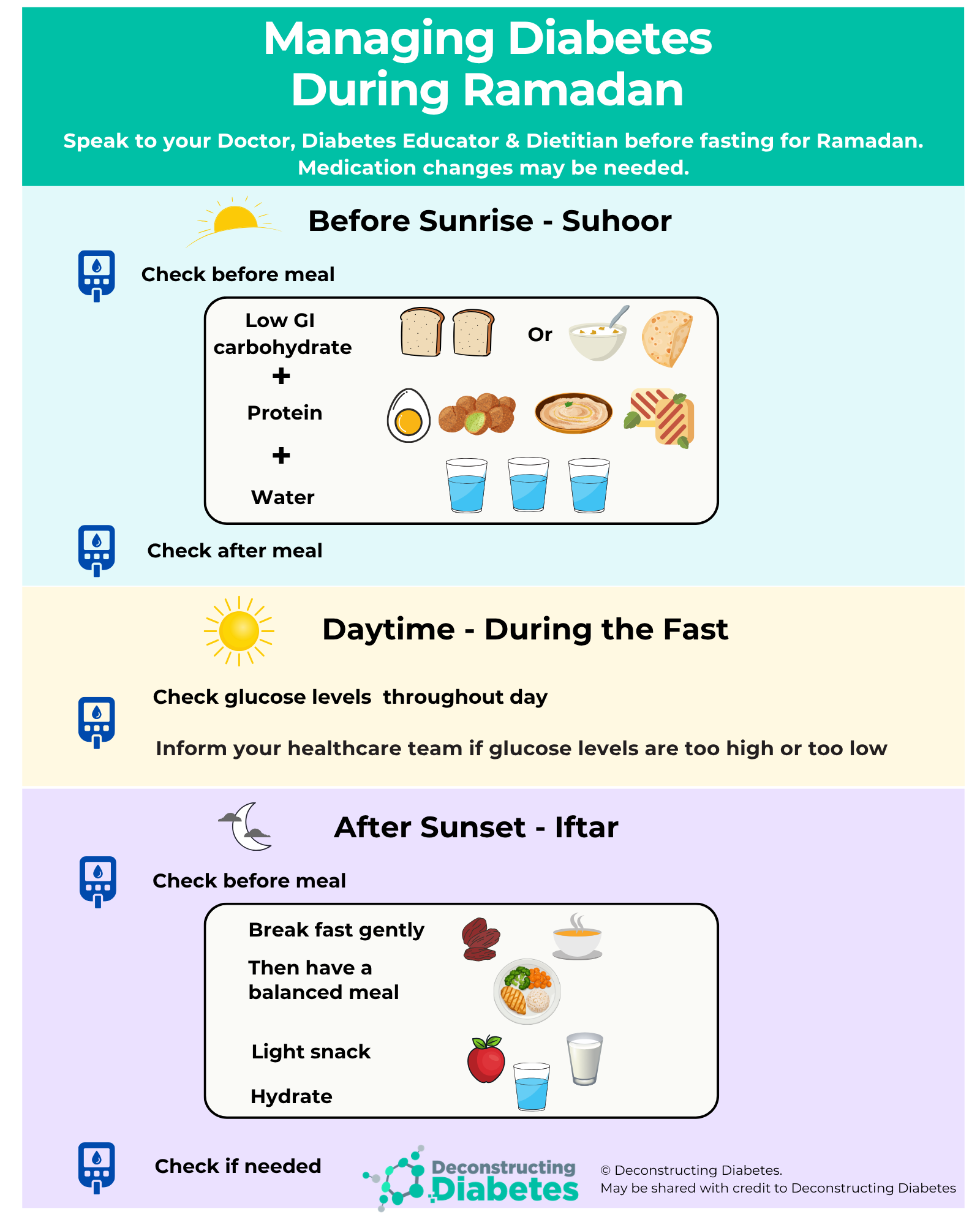
An infographic summarising key diabetes management steps during Ramadan, including glucose checks, Suhoor, daytime monitoring, Iftar, hydration and when to seek healthcare advice.
Before Sunrise
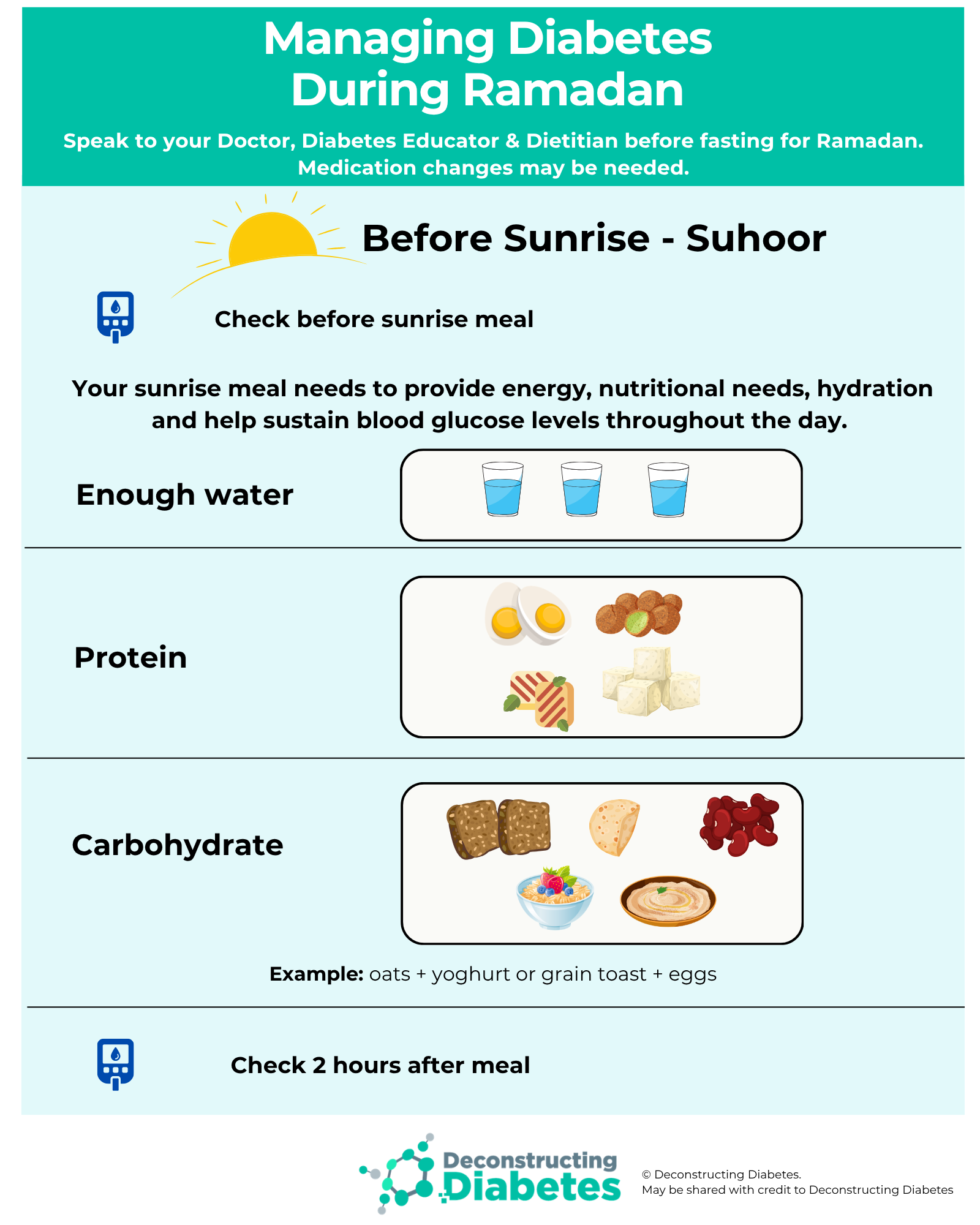
An infographic showing what to include at Suhoor for diabetes during Ramadan, including water, protein foods, carbohydrate choices and glucose checking after the meal.
During the Day
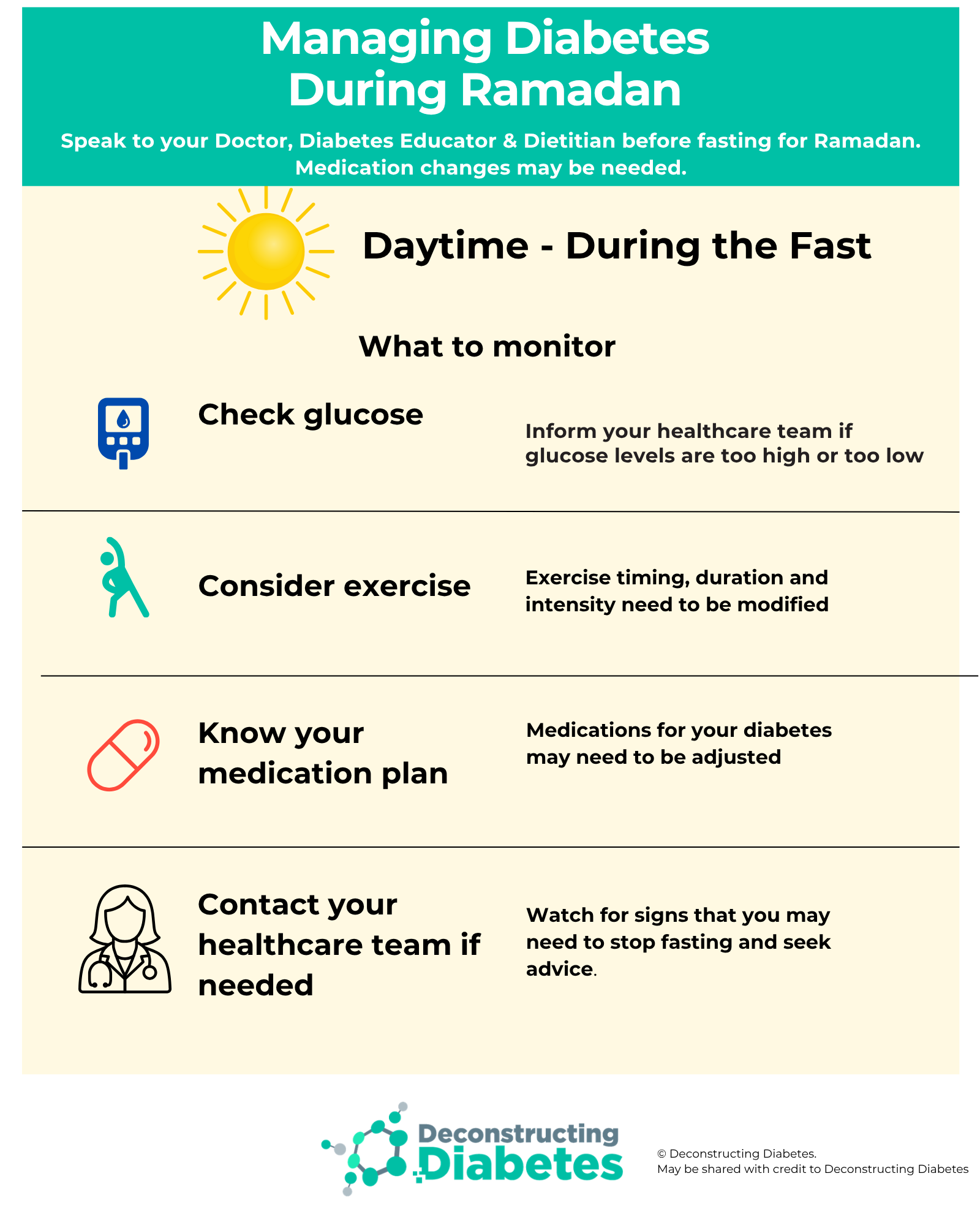
An infographic outlining what to monitor during Ramadan fasting with diabetes, including glucose levels, exercise, medication planning and when to contact a healthcare team.
After Sunset
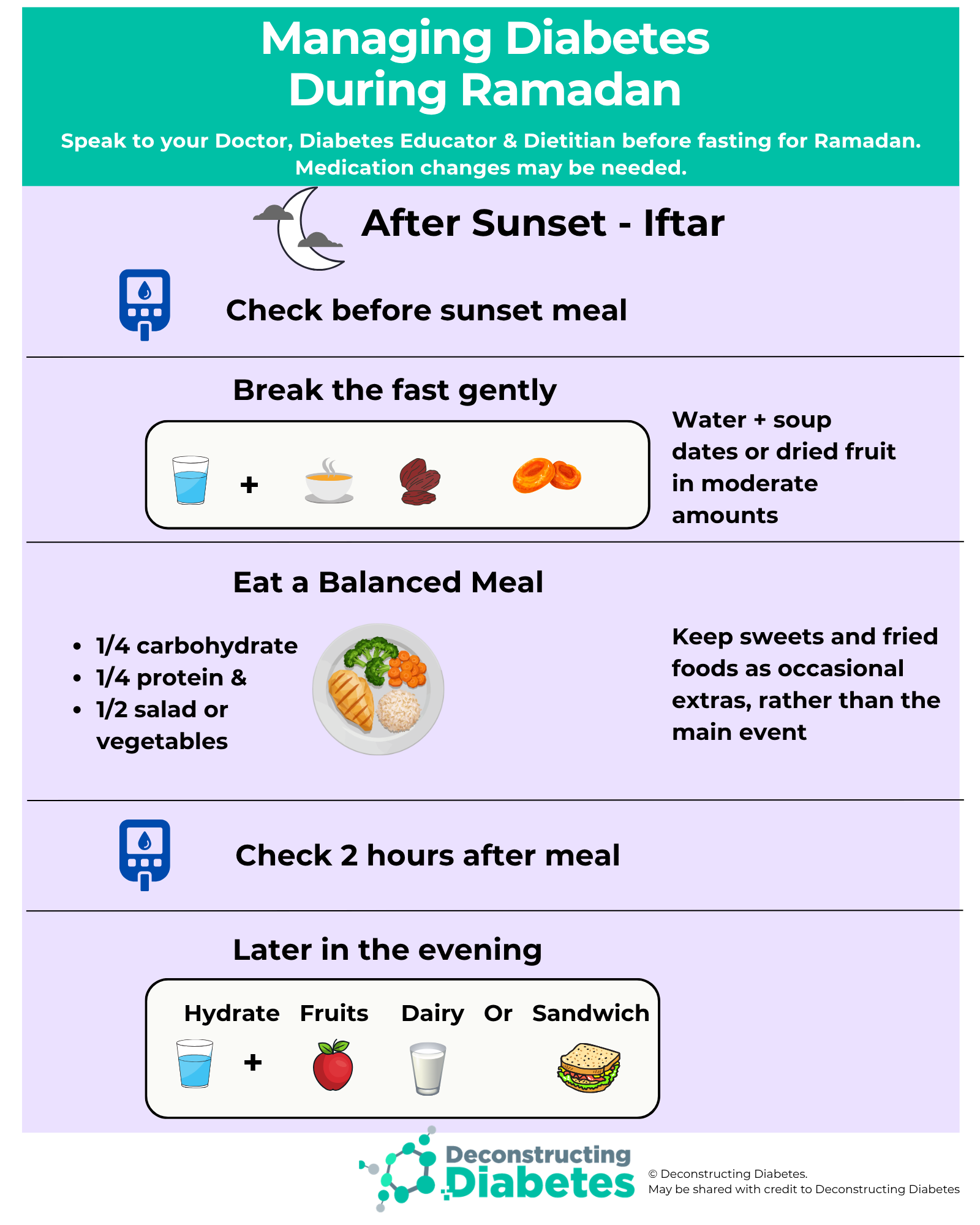
An infographic showing practical Iftar tips for diabetes during Ramadan, including checking glucose, breaking the fast gently, eating a balanced meal and hydrating later in the evening.
Need personalised advice?
Ramadan planning should be individualised. Your medication, glucose patterns, usual food choices, work routine, exercise, sleep and health history all matter.
If you would like support with diabetes nutrition during Ramadan, online diabetes dietitian consultations are available Australia-wide.
Not sure where to start with Type 2 diabetes?
You can also download the free Type 2 Diabetes Guide for practical steps to help guide food choices, meal structure and everyday habits.
Revised 2026
Acknowledgment to Lina Breik (Advanced APD) and Hiba Agha (APD) for assistance with the development of this material.