
GLP-1 Nutrition Support
Practical nutrition support for people taking Ozempic, Wegovy, Mounjaro or other GLP-1 and incretin-based medications, whether you take them for diabetes, prediabetes, insulin resistance or weight loss.
GLP-1 medications can change appetite, hunger, fullness, food preferences and the way you eat. For many people, this creates an opportunity to improve health, but it can also bring new nutrition challenges.
I’m Cam Johnson, an Accredited Practising Dietitian and I’ll help you eat well while your appetite, body and routine are changing, without adding more food rules.
If you’re on these medications, you need a practical meal structure that supports your nutrition-needs, glucose management, muscle health, reduces side effects, and long-term habits.
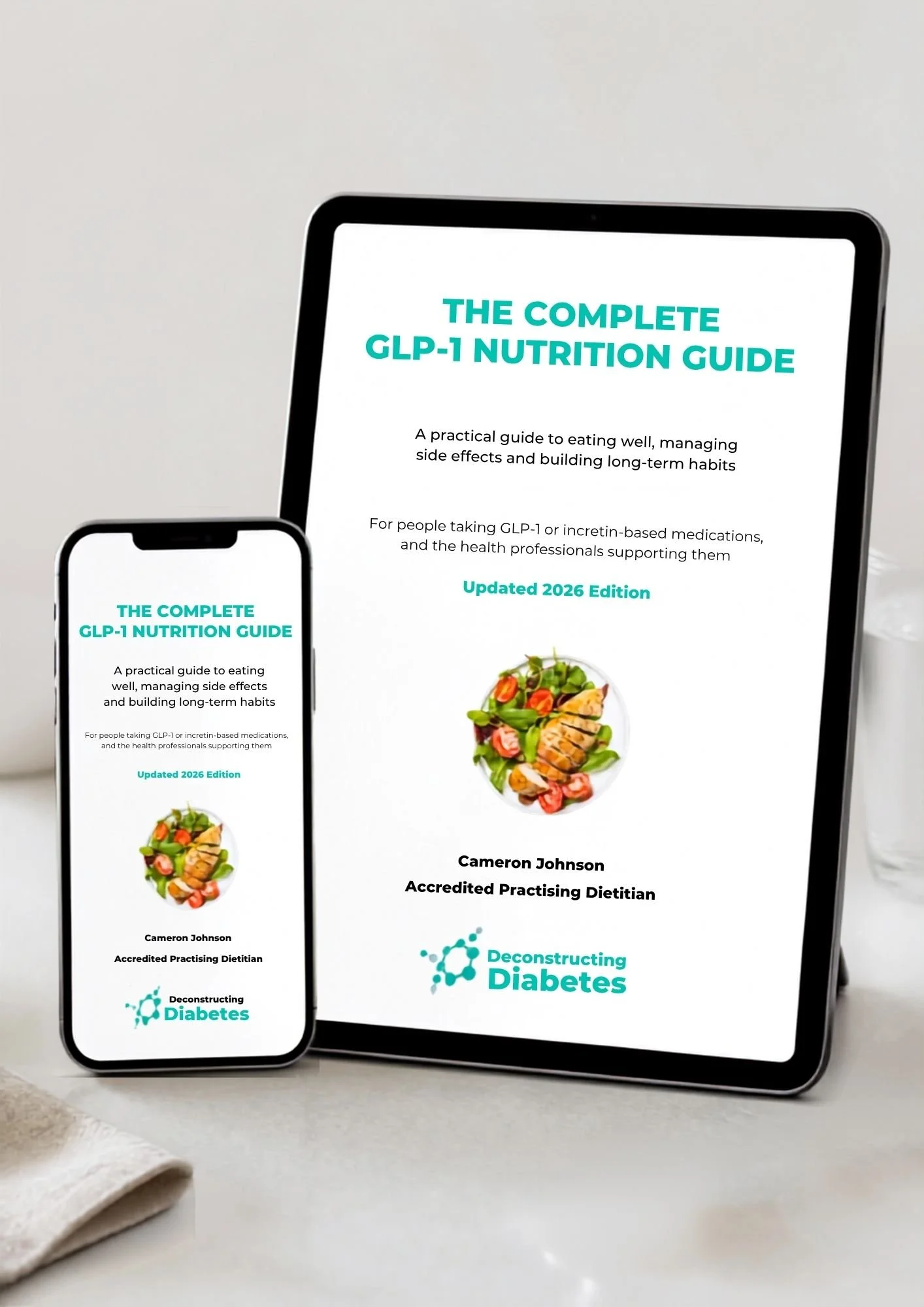
Eating less is not the same as eating well
When appetite drops, it is easy to assume nutrition is “working” simply because you are eating less.
But eating less does not automatically mean you are getting enough protein, fibre, fluids, vitamins, minerals or balanced meals, and it doesn’t build habits that last.
Good support helps you use this period well by focusing on what your body still needs, even when portions are smaller or appetite is reduced.
The focus is practical: protect your health, reduce avoidable nutrition gaps and build habits and skills you can keep using, no matter what stage you are at.
Common nutrition challenges on GLP-1 medications
People taking GLP-1 or incretin-based medications may notice changes such as:
• Reduced appetite, forgetting to eat or skipping meals
• Feeling full very quickly
• Difficulty eating enough protein
• Constipation, reflux, nausea, bloating or diarrhoea
• Less interest in cooking or meal planning
• Low energy or uncertainty about whether they are eating enough
• Confusion about carbohydrates, portions and glucose levels
• Concern about muscle loss during weight loss
• Uncertainty about what to do when appetite returns or weight loss slows
These issues are common. They are also easier to manage with a plan that adjusts as your appetite, symptoms and routine change.
Support at every stage
Just starting: set up meals, protein and fluids before appetite drops, and get ahead of side effects.
Settled in: keep eating well on low-appetite days, and adjust as your dose changes.
Plateau or maintenance: review habits when weight loss slows or goals shift.
Changing or stopping: plan meals and habits for when appetite returns or a dose changes.
What we’ll work on together
• Structuring meals around protein, fibre and fluids
• Eating well when appetite is reduced or meals feel too large
• Managing nausea, reflux, constipation, bloating or diarrhoea with food strategies
• Easier food options for low-appetite days
• Carbohydrate portions and glucose patterns, including CGM data
• Eating out, travel, work and social situations
• Supporting strength, energy and muscle protection during weight loss
• Plateaus, maintenance and long-term habits
Support is personalised to your medications, symptoms, diabetes type (if you have one), food preferences, and goals.
Online GLP-1 nutrition consultations
In your first appointment, we review your medication, appetite, symptoms, usual food intake, diabetes history, glucose patterns, health goals and lifestyle. From there, we create a practical plan that fits your current stage of treatment.
Follow-up appointments can help you adjust your plan as your appetite, dose, symptoms, glucose levels, weight or goals change.
I’m a dietitian, so I don’t prescribe medications or advise on doses. Those decisions stay with your doctor or prescriber, and I work alongside them with the foods you eat.
Prefer to start with a self-paced guide?
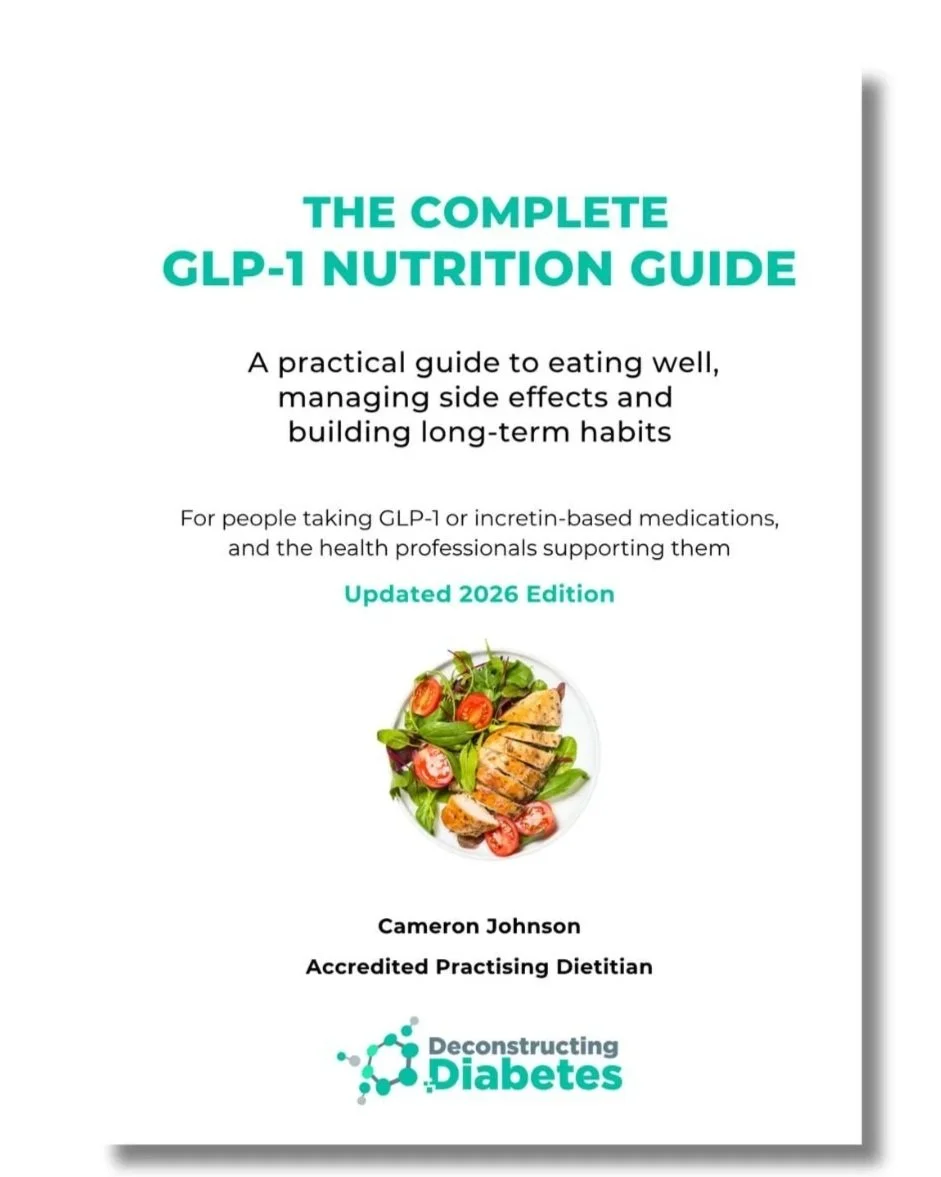
The GLP-1 Nutrition Guide by Deconstructing Diabetes is a practical resource for people taking Ozempic, Wegovy or Mounjaro, with guidance on eating well, managing side effects and building long-term habits.
The GLP-1 Nutrition Guide is a practical 108-page resource designed to help you eat well, manage side effects and build long-term habits while taking Ozempic, Wegovy or Mounjaro.
It covers protein, fibre, hydration, balanced meals, reduced appetite, common side effects, low-appetite days, eating out, plateaus, habit change and long-term maintenance.
Use the guide on its own, alongside dietitian consultations, or as a practical resource for health professionals supporting people taking these medications.
GLP-1 nutrition questions
What should I eat on Ozempic, Wegovy or Mounjaro?
There is no single diet that suits everyone. Most people benefit from structuring meals around protein, fibre-rich foods, and fluids, then adjusting portions based on appetite, symptoms and glucose patterns.
Do I need a dietitian if I’m eating less?
Eating less can reduce total energy intake, but it does not automatically mean you are meeting your needs for protein, fibre, micronutrients or muscle health. A dietitian can help you focus on nutrition quality, not just quantity.
Can nutrition help with GLP-1 side effects?
It may help some people manage symptoms such as nausea, reflux, constipation, diarrhoea or bloating, by adjusting meal size, timing, food texture, fibre, fluids, fat intake and trigger foods.
How do I get enough protein on a GLP-1 medication?
Protein needs vary between people. Support may include setting a realistic protein target, spreading protein across the day, choosing easier protein options when appetite is low, and adjusting meals as portions change.
Can you change my dose or prescribe?
No, dosing and presribing stay with your doctor. With your permission, I can send a summary to your GP.
Can you help if I’m coming off, or my dose has changed?
Yes. Appetite and eating patterns often change, and we can plan for that.
Can I book if I do not have diabetes?
Yes. GLP-1 nutrition support is available for people using these medications for diabetes, pre-diabetes, insulin resistance or weight-related health goals.
How many session will I need?
Most people start with an initial consultation, and a few follow-ups, depending on their needs.
Related reading
Blog article Why protein matters on Ozempic, Wegovy and what most people get wrong
Blog article What should you eat on Ozempic, Wegovy or Mounjaro? A dietitians practical guide