Snacks for Type 2 Diabetes: Do You Need to Snack, and what should you choose?
Do you need to snack between meals if you have Type 2 diabetes?
Some people have been advised to eat regularly through the day, including snacks. Others find themselves grazing through the afternoon, particularly when working from home, sitting at a desk or watching television. And with so many lists of “diabetes-friendly snacks” online, it can seem like snacking is something we should all be doing.
Before deciding what to snack on, it’s worth asking whether you need a snack at all, what’s influencing your choices, and what that snack could add to your day.
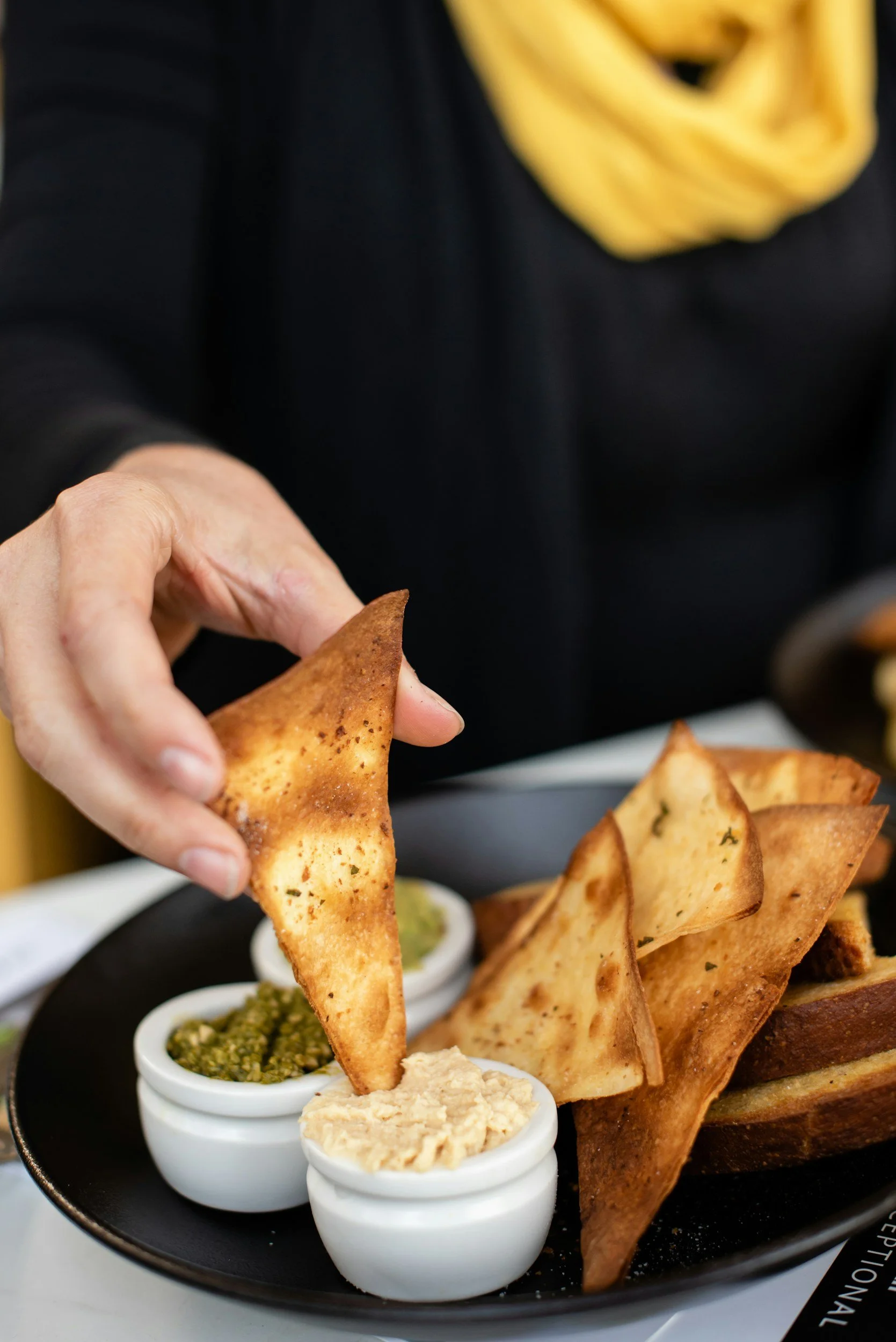
A hand holding bread with a dip, illustrating an everyday snack and the variety of food choices that can be included in a healthy eating pattern.
Do you actually need to snack?
For many people with Type 2 diabetes, three regular, satisfying meals provide enough food and nutrition without extra snacks. Others benefit from a snack because they’re hungry between meals, more active, have long gaps between meals or need additional nutrition.
Your medications matter too. If you use insulin or sulfonylurea medications, you may need individual advice about meal timing, activity and managing hypoglycaemia.
There’s no requirement for everyone to follow the same eating schedule. If you’ve had a satisfying lunch and aren’t hungry in the afternoon, there’s generally no need to snack just because it’s 3 pm. If you’re hungry and dinner is still hours away, having something to eat is quite reasonable.
Are you hungry, or is it habit?
So much of what we do around food happens out of habit. You might visit the fridge or pantry between tasks, reach for snacks at your desk, or eat in front of the television without much thought. Sometimes we’re genuinely hungry. Other times we’re bored, stressed, tired or responding to food that’s readily available.
Before reaching for a snack, ask yourself:
Am I hungry?
When did I last eat, and was that meal satisfying?
Am I eating because it’s my usual routine at this time of day?
Am I bored, stressed or looking for a break?
There’s nothing wrong with eating for enjoyment or having something because you feel like it. But if you’re grazing through the afternoon without much awareness of how much you’re eating, it may be adding more food and energy to your day than you realise and, depending on the foods and amounts, it may influence your glucose patterns.
Could your meals be more satisfying?
One of the things I often explore with clients who regularly snack is what they’ve eaten earlier in the day.
For example, someone has a small salad for lunch, perhaps with a little tuna or chicken, and is very hungry at 4 pm. Rather than concentrating only on the afternoon snack, I’d be interested in whether lunch is providing enough nutrition and satisfaction. Could the meal include more protein, some high-fibre carbohydrate, extra vegetables or healthy fats? The same applies to people who skip meals because they’re busy or haven’t had time to prepare something.
Sometimes improving your meals reduces the need to snack between them. And sometimes, even with satisfying meals, you’ll still be hungry in between, in which case a planned snack can be useful.
Snacks as nutrition top-ups
I often encourage clients to think about snacks as nutrition top-ups. Are you getting enough protein during the day? Could you do with more fibre, fruit, vegetables or calcium-rich foods? Many foods contribute more than one nutrient, and combining a couple can make a satisfying snack.
Protein: Greek or natural yoghurt with berries; cottage cheese with wholegrain crackers or vegetable sticks; a hard-boiled egg with cherry tomatoes; a glass of plain milk or calcium-fortified soy; lightly seasoned edamame
Fibre: fresh fruit or berries; carrot, cucumber or capsicum sticks; wholegrain crackers; homemade popcorn with a little salt and smoked paprika; roasted chickpeas
Healthy fats: a small handful of nuts or seeds; wholegrain crackers with avocado; vegetable sticks with hummus
Calcium: milk, yoghurt or a calcium-fortified alternative; a piece of fruit with some cheese
Combinations: fruit with a few nuts; yoghurt topped with nuts, seeds or fruit; frozen berries stirred through yoghurt; natural yoghurt left in the freezer for a short time for a different texture
Someone with a low protein intake might find yoghurt or cottage cheese useful. Another person who doesn’t eat much fruit might choose a piece of fruit with some nuts. Of course, sometimes you simply want a snack because you enjoy it. A few pieces of dark chocolate, biscuits and other discretionary foods can still have a place.
Keep in mind that fruit, milk, yoghurt and grain-based snacks contain carbohydrate and can influence your glucose levels, so portions and combinations may be worth considering, particularly if you’re monitoring your glucose patterns.
Snacks if you take a GLP-1 medication
Snacks can be particularly useful if you take a GLP-1 medication and have a reduced appetite or are eating smaller meals. In those situations, small top-ups such as yoghurt, cottage cheese, eggs or milk can help you meet your protein and other nutrition needs. If you’re struggling to eat enough, or have ongoing nausea or vomiting, speak to your doctor or prescriber.
For more, see my GLP-1 nutrition support page and the post on why protein matters on Ozempic, Wegovy and Mounjaro.
How much should you snack on?
It depends on your hunger, when you’re next eating, your activity, nutrition needs and diabetes management. A snack between an early lunch and a late dinner may need to be more substantial than something an hour before your evening meal.
You may also notice that some snacks are more satisfying than others. A handful of crackers might leave you looking for something else, whereas pairing them with cottage cheese or hummus can keep you satisfied for longer. It can also help to put your snack on a plate or in a bowl, particularly if you tend to eat directly from a large packet while working or watching television.
There’s no single snack portion or carbohydrate target that suits everyone with Type 2 diabetes. If you take insulin or other medications that can cause hypoglycaemia, discuss meal and snack needs with your diabetes healthcare team. And treating a hypo is different from having a routine snack. If your glucose is low, follow your individual hypoglycaemia treatment plan, which generally involves fast-acting carbohydrate rather than a high-protein or high-fibre snack.
Finding an approach that works for you
If you’re regularly grazing, take some time to consider what’s behind it. Are you genuinely hungry? Could your meals be more satisfying? Are you eating out of habit, or because food is in front of you?
Perhaps a planned afternoon snack would work better than repeated visits to the pantry. Or improving your lunch might keep you comfortably satisfied until dinner. And if you do snack, it can be a chance to top up on protein, fibre, fruit or calcium-rich foods.
The approach that works best for you should manage your appetite, meet your nutrition needs and fit into your everyday routine.
Looking for more help with Type 2 diabetes?
If you're unsure where to start with your eating habits, I've created a free Type 2 Diabetes Guide with seven simple steps to help guide your food choices and routines.
For more individualised advice, Deconstructing Diabetes provides online consultations across Australia. We can review your meals, snacking patterns, hunger, glucose levels and nutrition requirements to develop a practical approach that works for you.