Newly Diagnosed with Type 2 Diabetes? What to Eat and Where to Start
Just been told you have type 2 diabetes? The question that follows is almost always the same: so what do I eat now?
You may have walked out of the GP with a blood test result, a script and a referral. Then you searched online and found advice that contradicts itself. Cut all carbs. Eat more of them. Fast. Buy this powder.
This article covers what to eat after a type 2 diabetes diagnosis in practical terms: which foods to build your meals around, what to keep as occasional choices, and the questions people ask when first diagnosed.

A practical food and meal planning image for people newly diagnosed with Type 2 diabetes.
You do not need a completely separate diet
One of the most reassuring things to know is that Type 2 diabetes does not mean you need to eat “diabetic foods”, go hungry, or prepare completely separate meals from the rest of your family.
For many people, the first step is making practical adjustments to the foods they already eat.
That might include changing what goes into the shopping basket, the type and amount of carbohydrate foods, the balance of protein and vegetables, what you drink, and the timing of meals and snacks.
This keeps the focus on realistic changes rather than food rules or starting from scratch.
What can you eat with Type 2 diabetes?
Most foods. That surprises people.
There is no single diabetes diet, and you do not need to remove whole food groups. Most people do well when their eating has a few things in common:
regular meals, rather than long gaps followed by very large ones
carbohydrate foods that are high in fibre, in portions that suit you
a decent serve of protein at meals
plenty of fibre from vegetables or salad
fewer sugary drinks, alcohol and highly processed snack foods
The exact amounts depend on your size, your medications, your blood glucose results, your cultural food, your budget and what you actually like eating. That is why a generic list of "good" and "bad" foods rarely works.
What should you build your meals around?
It helps to have a set of default foods you come back to most of the time. Foods closer to their natural form tend to bring more fibre, protein, vitamins and minerals, with less added sugar and salt. Good everyday choices include:
vegetables and salad, fresh or frozen
whole fruit
eggs, fish, chicken, lean red meat, tofu and tempeh
legumes such as lentils, chickpeas and beans
plain milk, plain Greek yoghurt and cottage cheese
oats, barley, quinoa and grainy bread
unsalted nuts and seeds, olive oil and avocado
Protein and fibre help keep meals satisfying for longer, which makes it easier to get through the afternoon without grazing.
Do you need to cut out carbohydrates?
Not necessarily, but the type and amount do matter. Carbohydrate foods raise blood glucose more than protein or fat, so lower GI, higher-fibre options are a sensible default. They are digested more slowly and tend to keep you fuller. Think oats, grainy bread, basmati rice, lentils and other legumes, sweet potato and barley.
How much carbohydrate suits you depends on your appetite, glucose levels, medications and preferences. Some people do well with a lower carbohydrate pattern, others with something more moderate. The better option is the one you can keep doing.
What about takeaway, biscuits, soft drink and alcohol?
You do not have to give them up. What matters is whether they have become everyday defaults or stayed as occasional choices. A meat pie at the footy on Saturday is a very different pattern from a pie for lunch every day.
Look at which foods and drinks are becoming part of your usual foods being part of your usual routine. You don’t have to cut these out completely, but reducing how often they become everyday choices can be useful:
soft drink, fruit juice and flavoured milk
chips, savoury snacks and snack bars
biscuits, cakes, muffins and pastries
chocolate, lollies and ice cream
takeaway and processed meats
high sugar cereals
alcohol
If you want one place to start, make it sugary drinks. Swapping them for water, soda water or unsweetened tea and coffee is often a simple change.
What does a day of eating look like?
This is one example, not a prescription. Yours will look different depending on your preferences, culture, budget and medications.
Breakfast: two eggs on grainy toast with tomato and spinach, or plain Greek yoghurt with berries, rolled oats and seeds
Lunch: tuna, chickpea and salad wrap, or leftover chicken and vegetable soup with a slice of sourdough
Dinner: grilled salmon with roasted vegetables and sweet potato, a tofu and vegetable stir-fry with basmati rice, or lean meat and lentil bolognese with pasta and large salad
Snack, if you need one: an apple with peanut butter, a tub of plain yoghurt, or a small handful of nuts
Nothing fancy. Ordinary food, with some protein and fibre in most meals.
Does movement matter as much as food?
It matters more than most people expect. Even a 10 to 15 minute walk after a meal can lower the glucose rise that follows, because your muscles use glucose for fuel. Resistance training is also worth including. Building and maintaining muscle supports glucose levels, strength, balance and long-term health. If you sit for work, standing up and moving every 30 to 60 minutes helps too. Start with something realistic enough that you will actually repeat it.
Common questions after a Type 2 diabetes diagnosis
Can I still eat fruit? Yes. Whole fruit brings fibre, vitamins and water, and fits into a diabetes eating pattern for most people. Juice is different because it is easy to drink quickly, and the fibre is removed.
Can I still eat bread, rice and pasta? Usually, yes, but the type and portion matter. Grainy bread, basmati rice and legume or wholegrain pasta are good places to start.
Can I have sugar? Small amounts can fit. It’s best to keep sugary drinks and sweets are occasional rather than daily.
Do I need special diabetic foods? No. Everyday foods do the job, and products labelled diabetic are rarely necessary.
Do I have to give up social events, takeaway and eating out? No. One meal out, a birthday or a less organised week does not undo your progress. Keep nourishing everyday foods as your usual pattern and leave room for some flexibility.
Do I need to lose weight? For some people, weight loss improves blood glucose and may reduce medication needs. For others the focus is food quality, movement and routine. Your GP or dietitian can help you work out what is realistic for you.
Will I be on medication forever? That depends on you, your health and how your diabetes progresses. Some people improve their glucose levels enough to reduce medication, and others need it long term alongside food and movement. Neither is a failure.
Should I see a dietitian? If you feel overwhelmed, have been given conflicting advice, or know what to do but cannot make it work at home, it can help a lot. Ask your GP whether a GP Management Plan could make you eligible for Medicare rebates on dietitian visits, which can be done by telehealth.
Not sure where to start? Grab the free guide
My free guide, Not sure where to start with Type 2 diabetes?, takes the next step. It gives you seven simple habits for food choices, planning and movement, plus a starter checklist you can act on today. You do not need to do all seven at once. Pick one or two that suit you.
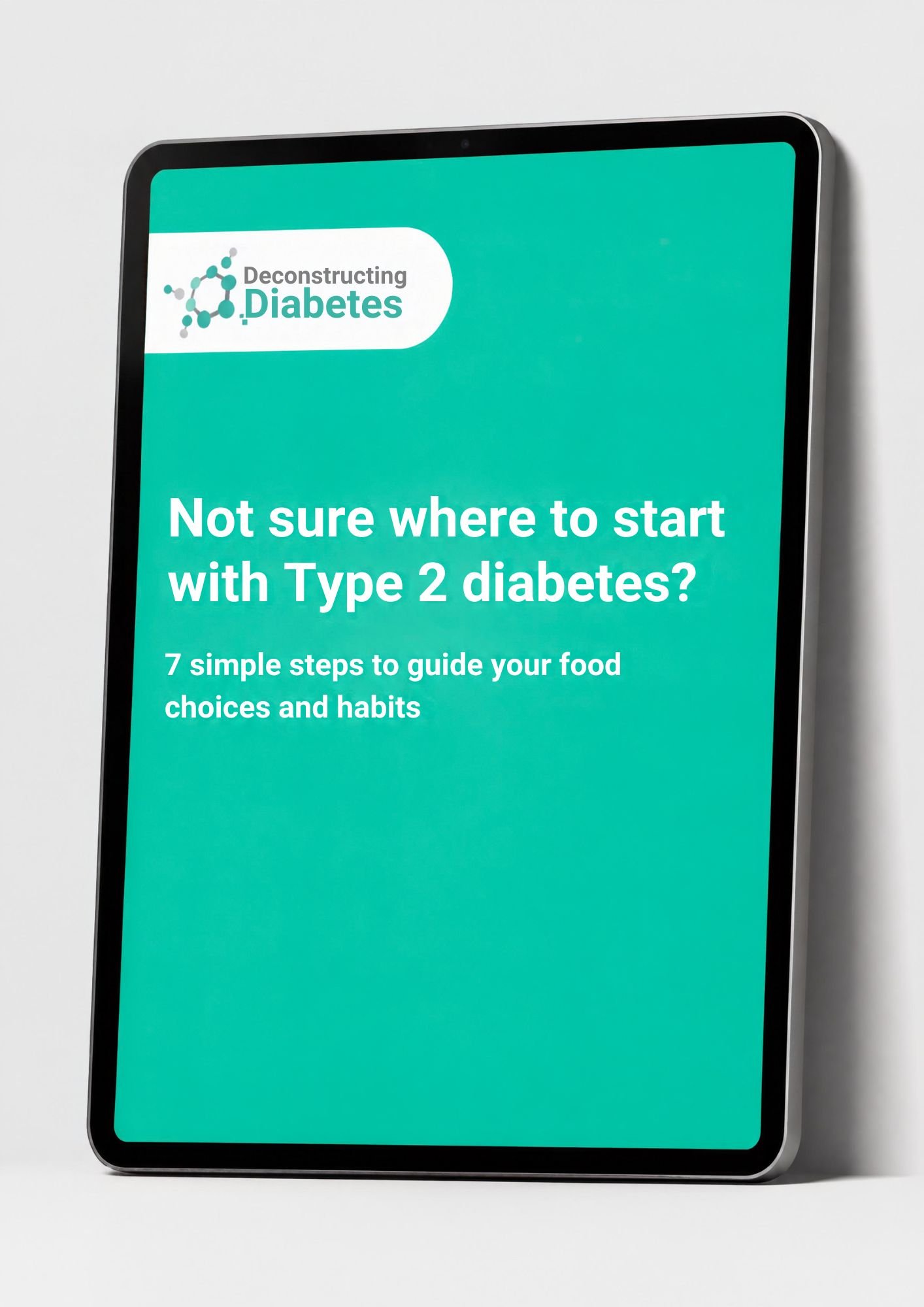
Free Type 2 Diabetes Guide, a practical starting point for food choices, meal structure and everyday habits.
Want advice built around your own situation?
General information only goes so far. If you would like help applying this to your medications, glucose patterns, routine and health goals, I offer online diabetes dietitian consultations Australia-wide via telehealth.
This article is general information only and is not a substitute for individual advice from your doctor, diabetes educator or dietitian.